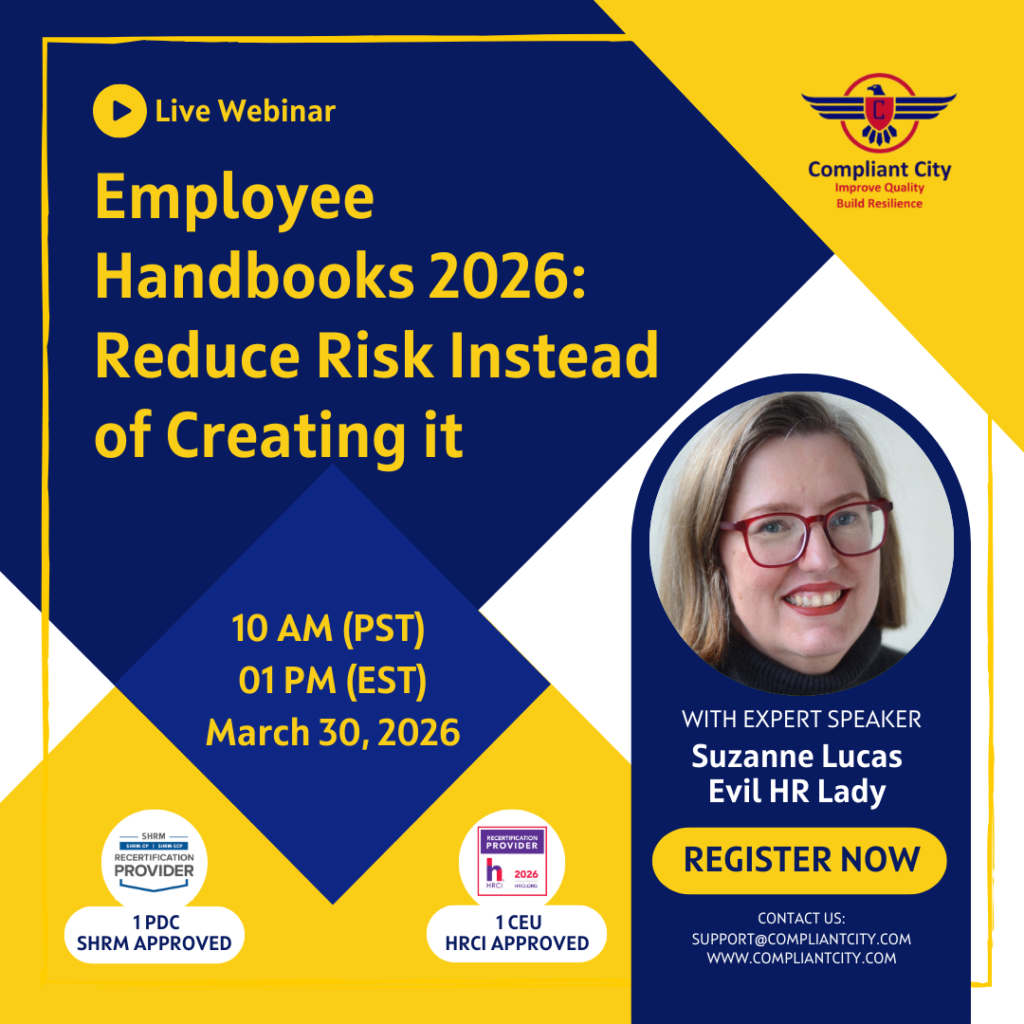
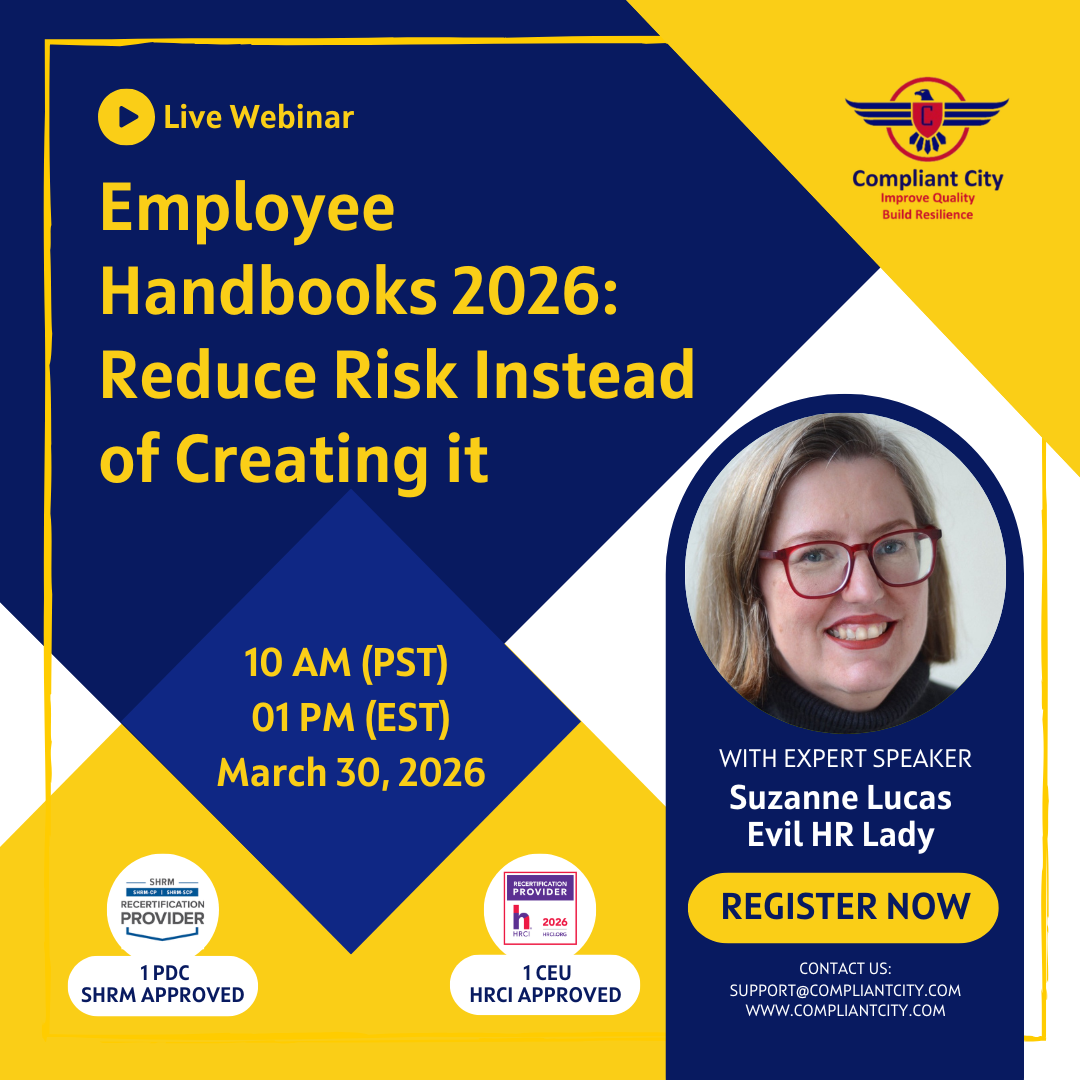
Most companies have an employee handbook. Far fewer have one that actually protects them.
What used to be a basic collection of policies has become something far more dangerous if handled poorly. Today, your employee handbook is no longer just a guide for employees—it is a regulatory document, a litigation exhibit, and a record of what your company promised or believed the law required.
Agencies such as the NLRB, DOL, and EEOC are actively scrutinizing handbook language. Courts are using handbooks as evidence. Employees and attorneys rely on handbook language to challenge discipline, terminations, pay practices, accommodations, and investigations.
At the same time, new laws and regulatory shifts—including the Pregnant Workers Fairness Act (PWFA), the PUMP Act, rapid expansion of AI in the workplace, multi-state workforces, and the One Big Beautiful Bill (OBBB)—have dramatically increased the risk created by outdated or poorly written policies.
A well-written handbook reduces risk.
A bad one multiplies it.
This webinar shows you how to design and update employee handbooks as risk management tools, not just policy lists—so they protect your organization instead of undermining it.
Webinar Overview
This webinar reframes employee handbooks as risk management documents and walks through the most common ways handbooks create legal, regulatory, and operational exposure.
You will learn how to identify and reduce five major handbook risk areas:
Regulatory Risk
How agencies interpret your policies—regardless of intent
- NLRB, DOL, EEOC, and state agency scrutiny
- The Stericycle standard and “reasonable employee interpretation”
- Common policy language that now creates risk (code of conduct, confidentiality, social media, investigations, technology use)
Accommodation & Leave Risk
When good intentions violate the law
- PWFA, PUMP Act, ADA, FMLA, and state law conflicts
- Attendance and break policies that backfire
- Manager discretion that undermines compliance
Technology & Surveillance Risk
How handbooks create AI, privacy, and NLRA exposure
- AI use in hiring, scheduling, and performance management
- Employee monitoring and tracking
- Social media and off-duty conduct policies
Operational Consistency Risk
Policies that exist—but aren’t followed
- Remote and hybrid work inconsistencies
- Timekeeping, discipline, and enforcement gaps
- Multi-state confusion and ignored addenda
The Impact of the One Big Beautiful Bill (OBBB)
How pay policies become tax-related evidence
- Tip and overtime deductions for tax years 2025–2028
- High-risk pay language that creates exposure
- Employer reporting considerations
- Writing clear definitions without giving tax advice
Evidence Risk
Why your handbook will be used against you
- Handbooks as Exhibit A in lawsuits and investigations
- Dangerous absolute language and guarantees
- At-will disclaimers, reservation of rights, and acknowledgments
Closing Segment: Updating Your Handbook Without Rewriting It Every Year
- Risk-based handbook audits
- Tiered policy structures
- When to update, when to add addenda
- How to work with legal counsel efficientlyDesigning handbooks for regulatory and political uncertainty
Why You Should Attend
Bad handbooks create risk—often more risk than having no handbook at all.
This webinar helps you:
- Identify where your current handbook creates exposure
- Align policies with real-world enforcement
- Avoid language that undermines investigations, discipline, or pay practices
- Prepare your handbook for ongoing legal and regulatory change
Before paying an attorney to rewrite your handbook, you need to understand what actually needs fixing. This webinar gives you the framework to do that—saving time, money, and unnecessary legal exposure.
Who Should Attend
This webinar is ideal for:
- Business Owners
- Human Resources Professionals
- Managers & Supervisors
- Compliance Professionals
- Operations Professionals
- Team Leaders

Reviews
There are no reviews yet.